Sign up for the Slatest to get the most insightful analysis, criticism, and advice out there, delivered to your inbox daily.
The legend goes like this: In 1999, a programmer named Patrick Barrett joined the video game studio Maxis to help develop the video game that would become The Sims. Working from an out-of-date design handbook, he coded the game to allow for same-sex relationships—even though the studio initially decided not to include queer relationships for fear of backlash. The game was demoed to press with a wedding scene at E3 1999, and during the demo two female Sims kissed. Suddenly the game was the talk of the event, and any attempt to walk queer content back would be impossible to do quietly.
Over the next 25 years, The Sims became one of the bestselling PC-game franchises of all time—and a cultural touchstone. It gave players a sandbox to experiment with identity, relationships, and family structures in—spaces that often were unavailable in real life. Queer players in particular were drawn to the series, not only because it allowed for same-sex romance before other mainstream games dared, but because of its open-ended character creator allowing it to be possible to imagine lives outside of the binary.
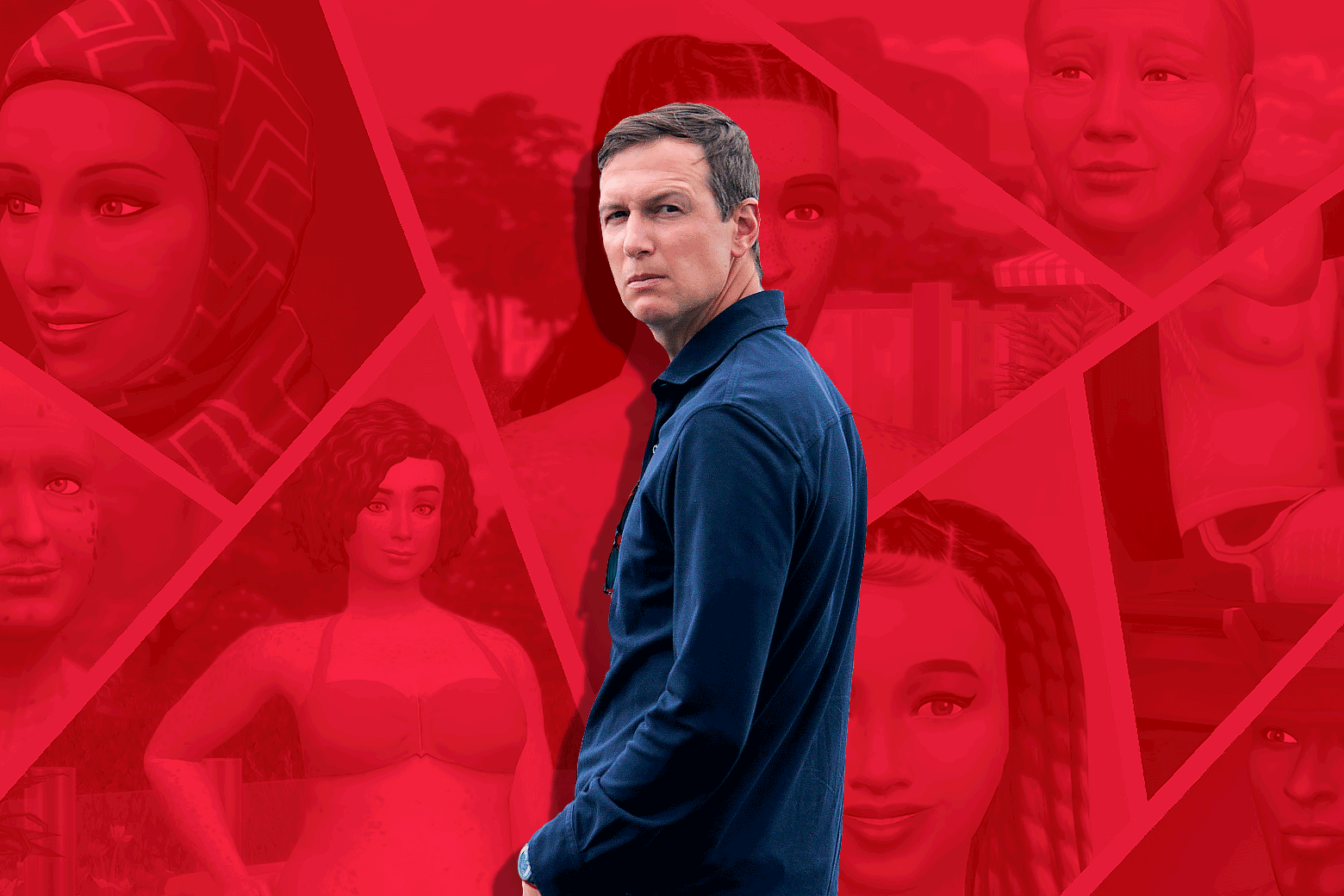
On Monday, video game publisher Electronic Arts—which owns The Sims—was acquired for $55 billion by a group made up of a number of different investment firms, the two biggest being the Saudi Arabia Public Investment Fund and Affinity Partners, an investment firm whose CEO is Jared Kushner, son-in-law to Donald Trump.
EA publishes a number of popular video game series you’ve probably heard of: Apex Legends, Battlefield, Mass Effect, Dragon Age, EA Sports FC (formerly FIFA), Plants vs. Zombies, and, of course, The Sims. Many of their games have made headlines over the years for pushing forward minority representation in the big-budget gaming space—from Mass Effect allowing same-sex relationships in the mid-2000s to Dragon Age featuring canon trans characters, and Apex Legends bringing queer and disabled characters into the online-shooter space. That’s no small feat, given how actively hostile the gaming space can be when anyone but an able-bodied straight white cis man gets to be the hero of a story.
That’s why queer gamers are concerned about EA being owned by the Saudi government, which is known for criminalizing homosexuality and for human rights abuses against queer communities, and by the son-in-law of Trump, a man overseeing a systematic rollback of minority rights in the U.S. and who has demonstrated a willingness to throw his weight behind censoring media he politically disagrees with.
While EA CEO Andrew Wilson has insisted that nothing about the company culture will change as a result of the acquisition, queer gamers are dubious of those promises, and concerned about the future of some of EA’s long-running progressive franchises—in particular The Sims. Initially released in February 2000, the video game series has always had its history tied closely to LGBTQIA+ representation, with the original title allowing same-sex relationships—which might have been the result of an internal miscommunication, if the Barrett story is to be believed.
There were a lot of queer-identity updates that followed in the franchise over the next 25 years, all of which opened the series up to more and more gamers of different gender and sexual identities, including myself as a trans woman. Over the past five or so years, we’ve seen a lot of flawed attempts at allowing players to create trans characters in video games, from Cyberpunk 2077 tying gender and pronouns to whether your voice is high-pitched or deep to games locking clothing options behind binary gender choices. While well-intentioned, these attempts to make trans-inclusive character creators have fallen short of feeling like they were designed with input from the trans community.
What made the character creator in The Sims 4—the latest in the franchise—so special was the way that, following a 2023 update, it allowed for different aspects of a Sim to be customized without making assumptions about what that means for a character’s gender identity. Can your Sim get pregnant? Can they get other Sims pregnant? Can they pee standing up? Do they use custom pronouns? Can this Sim produce milk?
These options, distinct from your Sim’s gender, exist in a way which supports the reality of trans bodies. They’re allowed to coexist in ways that might seem unusual to cis audiences. They’re allowed to be mixed in ways which may be appropriate for intersex characters. They represent a wide range of what trans bodies can be and do, in a world where nobody questions the capabilities of trans bodies.
In real life, some people can produce breast milk while still being capable of getting someone pregnant. Some can get pregnant, but also pee standing up. Some of us have top-surgery scars, and others wear binders or shapewear. Trans bodies are beautiful, and this kind of character creator really helps to destigmatize bodies like mine, and those of my friends and our wider community. That distinction is really significant in a world that expects invisibility and conformity for us to be seen as beautiful.
EA’s queer representation has meant a lot to me over the years, from many different perspectives. For example, Studio Bioware, which is owned by EA, had some issues with harmful trans representation in Mass Effect Andromeda (a trans woman moves across the galaxy to get away from her deadname, then blurts it to the player unprompted during a first conversation), but the studio was really receptive to feedback from trans players like myself, and updated the game in a patch to fix the issues present. A few years later I got to work as a consultant on one of their later games, Dragon Age: The Veilguard, where players could play a canonically trans main character, and get unique dialogue when helping a non-cis party member during their coming out journey. Getting to see studios under EA grow and improve in their queer representation over the years has meant more to me than you can imagine.
But seeing a government and the son-in-law of a president who regularly demonizes trans people set to financially benefit from and potentially shape the future direction of these game series truly worries me as a queer trans woman in the gaming space.
One user I spoke to via email said that The Sims was the reason they came out in the first place. “The queer representation has been my safe place when times weren’t certain,” they said. “Now, it’s being sold to people who would murder me simply for going against their ideologies. I honestly feel that the future of the Sims looks grim, and I do not want to support people who hate me simply for being who I am.”
A lot of the people I spoke to for this story were more concerned by Jared Kushner’s involvement in the EA acquisition than they were the Saudi Public Investment Fund. Most recognized that the PIF seems mostly interested in reputation laundering and diversifying their income streams from foreign companies. While reports indicate that the Assassin’s Creed Mirage DLC set in ancient Arabia was a direct result of PIF funding, pushing progressive themes out of media they’re shareholders in doesn’t seem to be an immediate short-term goal.
However, Project 2025 weighs heavy on many minds, as do the attacks of Trump and Republicans in the U.S. on the creation and distribution of media perceived to have a “left-wing bias.” While Kushner is not officially part of the current administration, most I spoke to feel like proximity to Trump and American politics poses a greater risk of triggering a stampdown on queer content than the PIF’s involvement—at least in the short term. “I am just very sad with the way politics in the US are right now.” Reddit user Blueberry0721 said in a thread I posted for this story, “and with so many companies throwing out their support for queer and trans folks I really appreciated that EA was at least continuing as they always had in supporting us.”
“There’s already been relentless efforts to get right wing content into high schools by Turning Point, or remove LGBTQ+ content through school boards, endless book bannings, replacing PBS with PragerU,” explained user ClipItSims. They added, “I think everyone is completely valid for being afraid.”
For many The Sims fans, this is the last straw. While some are boycotting The Sims and EA’s other software starting today, others have vowed to do so before the early-2027 finalization of the acquisition. It’s hard to tell if the numbers planning to boycott will be significant enough to be noticed and felt, but the mood in online The Sims communities is that these new investment partners are at odds with what they believe the game’s and its communities’ values to be.
Company acquisitions are nothing new, but the more we see the video game industry consolidated under a small number of megacorporations, the harder it becomes to make ethical choices without having to move away from series that might be personally significant to you.
I wish I had a neat and tidy answer to what we as a gaming community can do about this. Some pretty terrible people are soon going to own a key piece of queer culture, and even if they don’t pressure for the removal of queer content from The Sims, purchasing future games and content will financially benefit terrible people. I know I’m going to be moving away from purchasing EA software, but I recognize that kind of principled stance is a lot to ask in an industry where alternative options feel increasingly sparse.
That first queer kiss in 1999 may have been an accident, but allowing Kushner and the PIF to own The Sims was not.