Sign up for the Slatest to get the most insightful analysis, criticism, and advice out there, delivered to your inbox daily.
It’s around midnight, and nearly all of the incarcerated people housed at Washington Corrections Center are locked up. Dennis Repp and Durrell Jackson, however, are lingering in a dayroom, waiting to be escorted to the solitary confinement unit where they work as custodians.
The work is brutally demoralizing.
“For starters, the incarcerated workers are forced to undergo strip searches before we begin our jobs,” Repp, who has two years on the job, told me. “These strip searches consist of getting completely naked before a prison guard, revealing our hands, feet, opening our mouths, lifting our scrotums, and spreading our buttocks to give them a complete view of our anus, which never ceases to be a sickening experience for me.”
After the strip search, work crews put on bright-orange jumpsuits, and then load their carts with brooms, mops, spray bottles, and cleaning rags torn from old T-shirts and sweatpants. They wheel their carts through an electronic steel gate leading to a long hallway to begin sweeping, mopping, and wiping down recreational equipment that prisoners use during the one hour they’re let out of their solitary confinement cells.
Repp says that besides folding laundry, these are the least stressful tasks “in an environment that is so unsettling.”
A growing body of evidence shows that solitary confinement causes extreme suffering and mental and physical breakdowns even in individuals with no history of psychiatric issues, with symptoms that include anxiety, depression, psychosis, self-harm, and suicide. For people with underlying mental illness, who are more likely than others to land in solitary, the effects are even more dire and deadly. Custodians in solitary confinement units confront these realities every time they go to work.
“When we first walk onto the tier,” a hallway where prisoners are housed, “we’re usually met with the scent of body odor, dirty clothes, and rotten fruit,” Repp said. “Sometimes the strong stench of pepper spray lingers in the air from a prisoner being sprayed by a guard earlier in the day.”
“On numerous occasions, we would hear prisoners kicking their cell doors and screaming in the middle of the night, because they were either having a mental breakdown or prison guards were withholding basic necessities, like toilet paper, from them,” he said.
Repp talked about the emotional burden of working in a solitary confinement unit night after night.
“It’s very disturbing to see human beings locked in concrete boxes for 23 hours a day,” he said. “Many of these people really need mental health assistance. But instead of getting proper help, they’re being held in cages and treated like they’re not people.”
Jackson, who worked in solitary for two years, said that the condition of each cell is different, depending on the prisoner’s mental health.
“Solitary cells that weren’t occupied for long periods usually have an unmade bed and a brown paper bag plastered to the cell’s overhead light with toothpaste,” Jackson said. “Although it’s frustrating to scrape the paper and toothpaste off the light, I understand. Those lights are bright and never turn off, which can make it difficult for prisoners to sleep at night.”
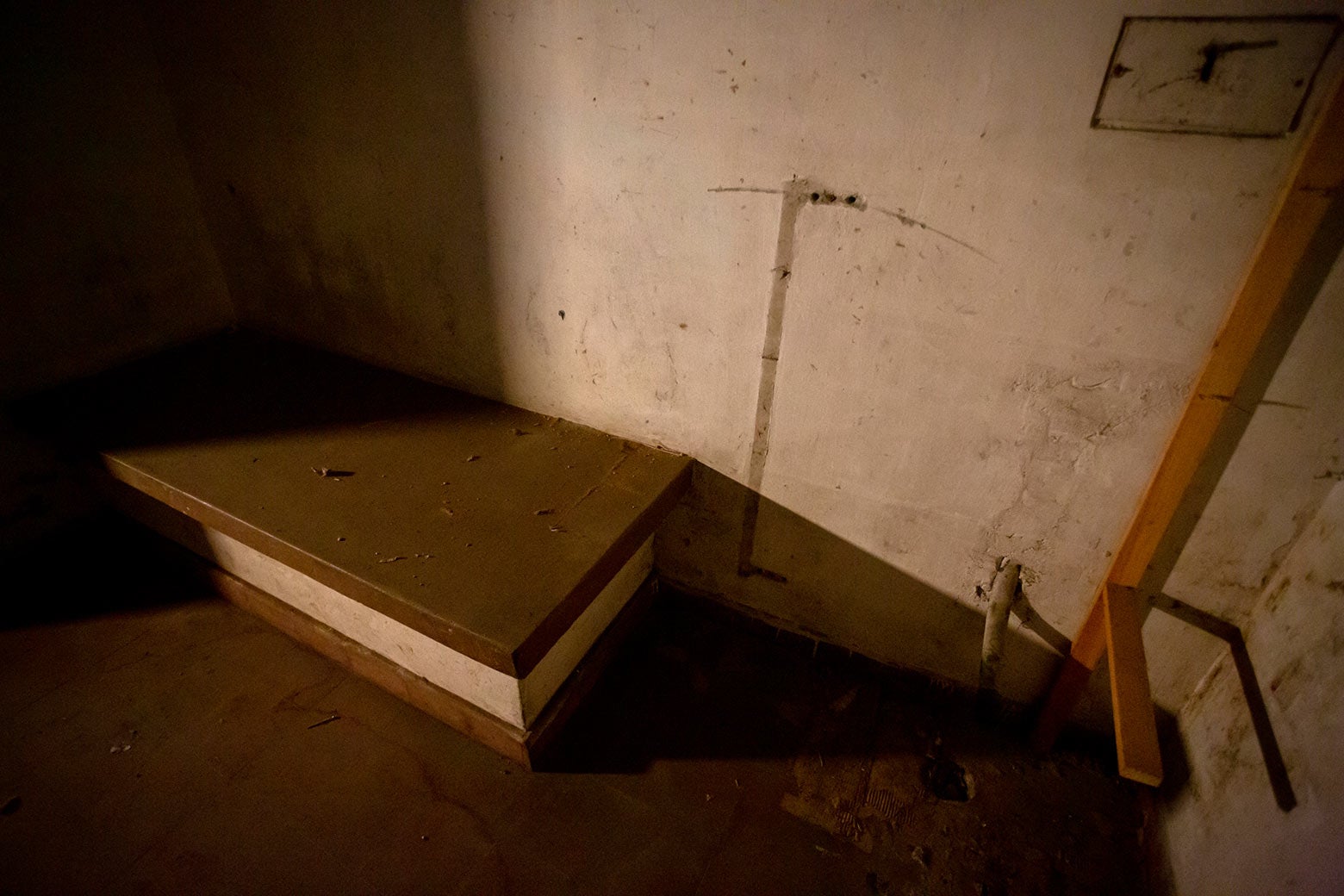
On the other hand, cells occupied for longer periods “usually have piles of moldy food, swarms of bugs, and layers of dust on the floors, beds, and toilets,” he said.
The work crews receive hazmat training to handle biohazards such as urine, feces, and other bloodborne pathogens, including HIV and hepatitis.
When mattresses are contaminated with biohazards, cleaning becomes difficult, Repp said, because fluids “seep into the foam, where it can’t be decontaminated.”
Repp said he told guards about the contaminated mattresses and was told to wipe them as much as possible so they could be reused.
“Prison guards would only dispose of a mattress when it was torn, not because it posed a health hazard, because they fear prisoners would hide contraband inside the ripped mattress,” Repp said, “but sleeping on a contaminated mattress creates serious health risks. The mattress begins to mold, creating ammonia and causing long-term respiratory complications and even death when inhaled for long periods of time.”
Jackson further explained why the work can be so distressing. “One night I came to work and we had to clean a cell after a prisoner slit his wrist with a razor,” he said. “There was blood all over the bed, floor, and hallway. Mentally processing that we’re cleaning the remains of an attempted suicide was emotional and extremely hard to stomach.”
He continued: “Another prisoner, at least three times a week, would defecate in his hand, rub it all over the wall, smear it under the bed, and in between the doorjambs. Occasionally, he would urinate on the floor, which would leak outside the cell door and onto the tier, leaving the workers to clean it up. Despite the blood and body fluids that were in these cells, we weren’t given the proper equipment to protect our eyes, face, head, or shoes, which was required by the Occupational Safety and Health Administration.”
Jackson added that whenever a solitary cell contained blood or body fluids, they were instructed to use a pressure washer, which was loud and would jar other prisoners from their sleep in the middle of the night.
“On multiple occasions, some of the workers would leave the job with specks of paint and feces on their skin and hair because they weren’t provided proper protection while using the pressure washer to clean a cell,” Jackson said. “For years, the protective equipment the custodians were provided didn’t go beyond jumpsuits and ordinary rubber gloves.”
Jackson eventually resigned from working in solitary after a prison guard forced him to work on his day off.
“I wasn’t mentally prepared to work the night they wanted me to work. Between being in prison and working in such a traumatizing environment, I needed time to manage my own mental health. That place will make you lose yourself,” he said. “But rather than valuing my mental and emotional well-being, the guard threatened to give me a major infraction if I didn’t show up to work, which is a policy violation that prisoners can receive for refusing to work a prison job.”
According to Washington Department of Corrections policy, such violations can result in individuals being locked in their cell for weeks, losing recreation and commissary privileges, or being transferred to another prison that might be hundreds of miles away from their families and support systems.
Repp said that he quit after the prison administration tried to force work crews to clean blood and bodily fluids without compensation.
At last count, more than 122,000 people were in solitary confinement in federal and state prisons and local jails across the United States. Washington utilizes solitary confinement at a rate lower than many states, and has pledged to reduce it further. Yet in the last quarter of 2025, the average daily count of individuals in “restrictive housing” was still 829—about 5.7 percent of the state’s total prison population.
Repp said that if solitary confinement must continue, the changes needed are obvious. “Prisoners in solitary confinement should be treated more humanely. Rather than confining people to a concrete cage for 23 hours a day, they should have more time out of their cells, regular showers, and more opportunities to communicate with their loved ones,” he said. “Prisoners with mental health issues should be getting treatment instead of being placed in solitary for months on end.”
After months of complaints by the custodians, prison officials finally provided boots, eye protection, and water-resistant suits for solitary confinement unit workers.
“It’s one thing to protect your body from toxic substances,” Repp said, “but it’s another thing to protect your mind from toxic experiences, especially the ones that consist of cleaning a cell from someone who’s tried to commit suicide.”
This article was supported by a grant from the Ridgeway Reporting Project, managed by Solitary Watch with funding from the Jacob and Valeria Langeloth Foundation and the Vital Projects Fund.