Sign up for the Slatest to get the most insightful analysis, criticism, and advice out there, delivered to your inbox daily.
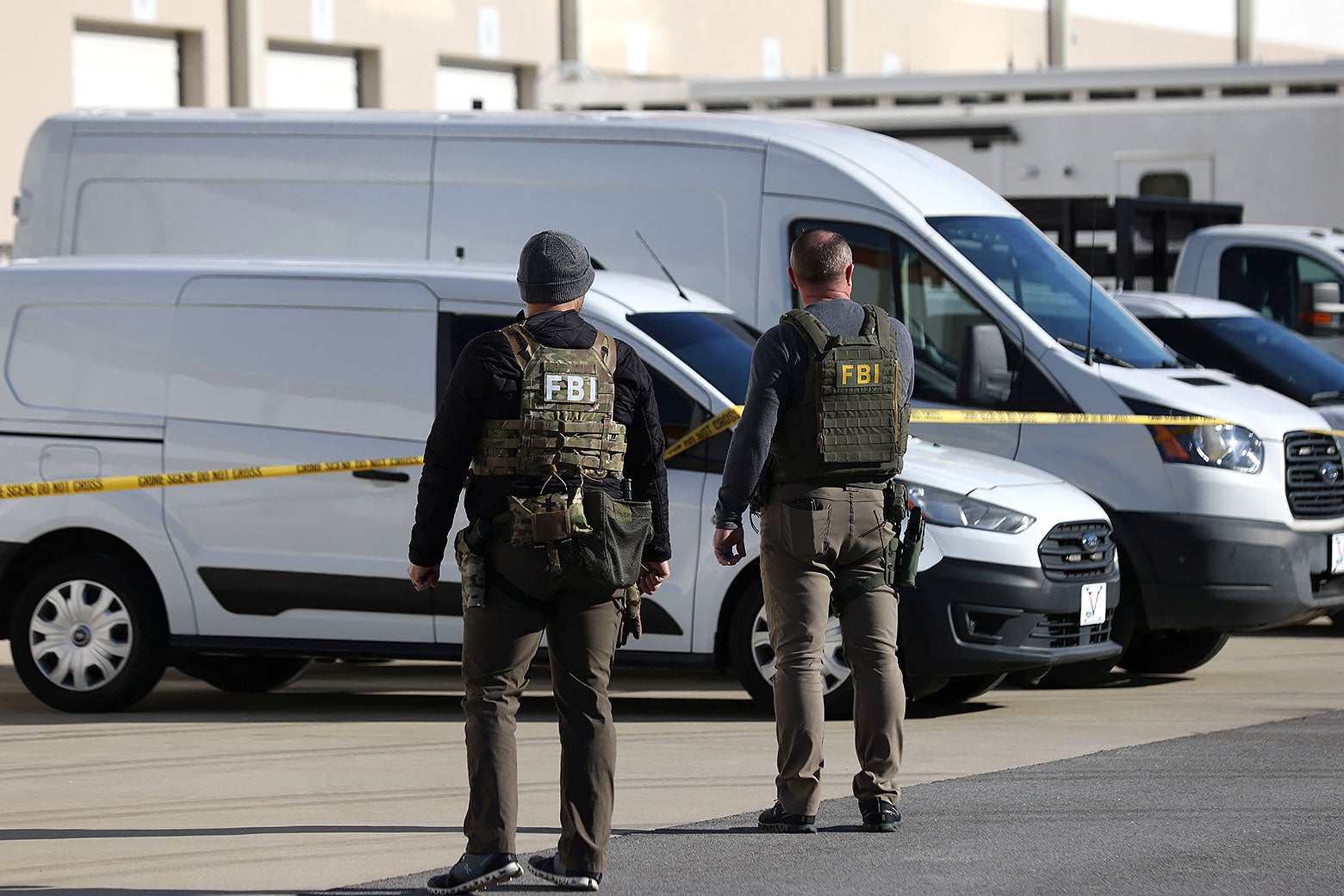
The optimistic story about the FBI’s surprising Wednesday raid on Fulton County, Georgia, voting offices to seize ballots and electronic materials related to the 2020 election is that it’s another instance of the United States Department of Justice and other parts of the federal government indulging in Donald Trump’s fantastical belief that he lost the presidential election to Joe Biden in 2020 because of fraud. If that reason for the raid is right, the investigation will amount to very little, even if Trump and allies mangle whatever evidence the FBI produces to continue spreading ridiculous voter fraud claims. If the government attempts to bring criminal charges (that may well be barred by the statute of limitations), they are far more likely to be about Trump’s retribution campaign than about actual intentional violations of federal law protecting the integrity of elections.
The pessimistic story is far darker. It’s about the raid being a test run for messing with election administrators and the counting of ballots in the midterm elections in 2026, when control of both houses of Congress could be at stake. Now is the time for state and local governments, the courts, and the people to work against such potential election subversion.
The Fulton County saga goes back to the hotly contested 2020 presidential election, which was conducted in the midst of the COVID-19 pandemic. Donald Trump was an unpopular incumbent running against former Vice President Joe Biden. Many states made it easier for people to vote by mail in 2020, which was much safer than voting in person and potentially getting sick. Trump had long spread unsubstantiated claims about voter fraud, from massive noncitizen voting to fraud committed in large American cities like Philadelphia and Detroit that have substantial minority populations. But during 2020, Trump turned his propaganda machine on the influx of mail-in ballots, which he claimed would be infected by fraud; never mind that he regularly voted by mail in his home state of Florida.
Election results came in slowly, thanks in part to the slower count necessary to properly process the flood of mail-in ballots. When the numbers were released, Biden had won, including in Georgia, where he claimed victory by a slim margin. Trump tried various tactics to overturn that result and others. Before the Jan. 6, 2021, attack on the U.S. Capitol—an unsuccessful attempt to stop Congress from counting states’ Electoral College votes and declare Trump the winner—Trump leaned on election administrators and elected officials in states with majority-Republican legislatures to overturn the results. Even though Georgia had conducted a hand recount of all the state’s ballots that confirmed Biden’s victory, Trump notoriously pressured Georgia Secretary of State Brad Raffensperger to “find” 11,780 votes to flip the results to him. Raffensperger refused.
While Trump worked the refs, his allies worked the public, and much of the effort to gin up fraud claims focused on the processing of ballots in State Farm Arena by Fulton County election workers. Focusing on an area with a large population of Black voters was par for the course among Trump’s fraudulent fraud-squad members. Rudy Giuliani falsely accused two election workers there of fraud (as well as passing around drugs), and they faced threats and harassment; the workers, Wandrea Moss and her mother, Ruby Freedman, won a $148 million defamation suit against Giuliani, which later settled.
Fulton County, like many large counties in the United States, has seen its share of election administration mismanagement. But a yearslong investigation by state officials found no intentional wrongdoing and nothing that would have changed the 2020 outcome.
Given the deep investigations of the 2020 elections generally and Fulton County, Georgia, in particular, it is highly unlikely that the new FBI investigation (whose warrant was curiously sought by a U.S. attorney in Missouri, not Georgia or even Washington, D.C.) will amount to anything. So what was it really about?
One tipoff is the curious appearance during the FBI raid of Fulton County’s election offices of Tulsi Gabbard, director of national intelligence, who is known to peddle conspiracy theories herself. Portraying this raid as part of a national security effort is in line with the musings of Cleta Mitchell, a Trump conspiracy-theory ally who had been on Trump’s call with Raffensperger. Back in September, Mitchell, on a call with fellow election deniers, suggested that Trump could declare a “national sovereignty crisis” in a bid to take over the midterm elections.
Trump has no power over the conduct of federal elections, which are left in the hands of the states, a point numerous courts have made recently in striking down parts of an August Trump executive order purporting to make voting harder. But that doesn’t mean he won’t try. Trump has expressed regret that he did not seize voting machines in 2020. So this threat for 2026 (and 2028) is real.
So what can be done about all of this? To begin with, state and local election officials need to be ready to go to federal court to seek injunctions barring the government from seizing voting machines or otherwise interfering with the process of tabulating ballots. Trump might even try to send troops to seize ballots without a search warrant, and if that threat is real, proactive judicial action is necessary. These threats are most likely to materialize in those areas around the country with contested congressional races. Particular targets may be in those states, such as California and Arizona, where the tabulation of ballots takes a long time, so there is more time for Trump and his allies to act.
State officials and the public need to support, with dollars and volunteers, election administrators and those who would hold the line against interference. The greater the transparency of the work of these administrators in tabulating ballots, and the quicker a fair count can take place, the harder it will be for Trump to have a legal excuse to try to interfere with the balloting.
Donald Trump is not going to be able to cancel U.S. elections. But the events this week in Fulton County remind us that he has many tools at his disposal to try to mess with them. It’s not too early to plan against another attempt to overturn democratically conducted elections in the United States.