Sign up for the Slatest to get the most insightful analysis, criticism, and advice out there, delivered to your inbox daily.
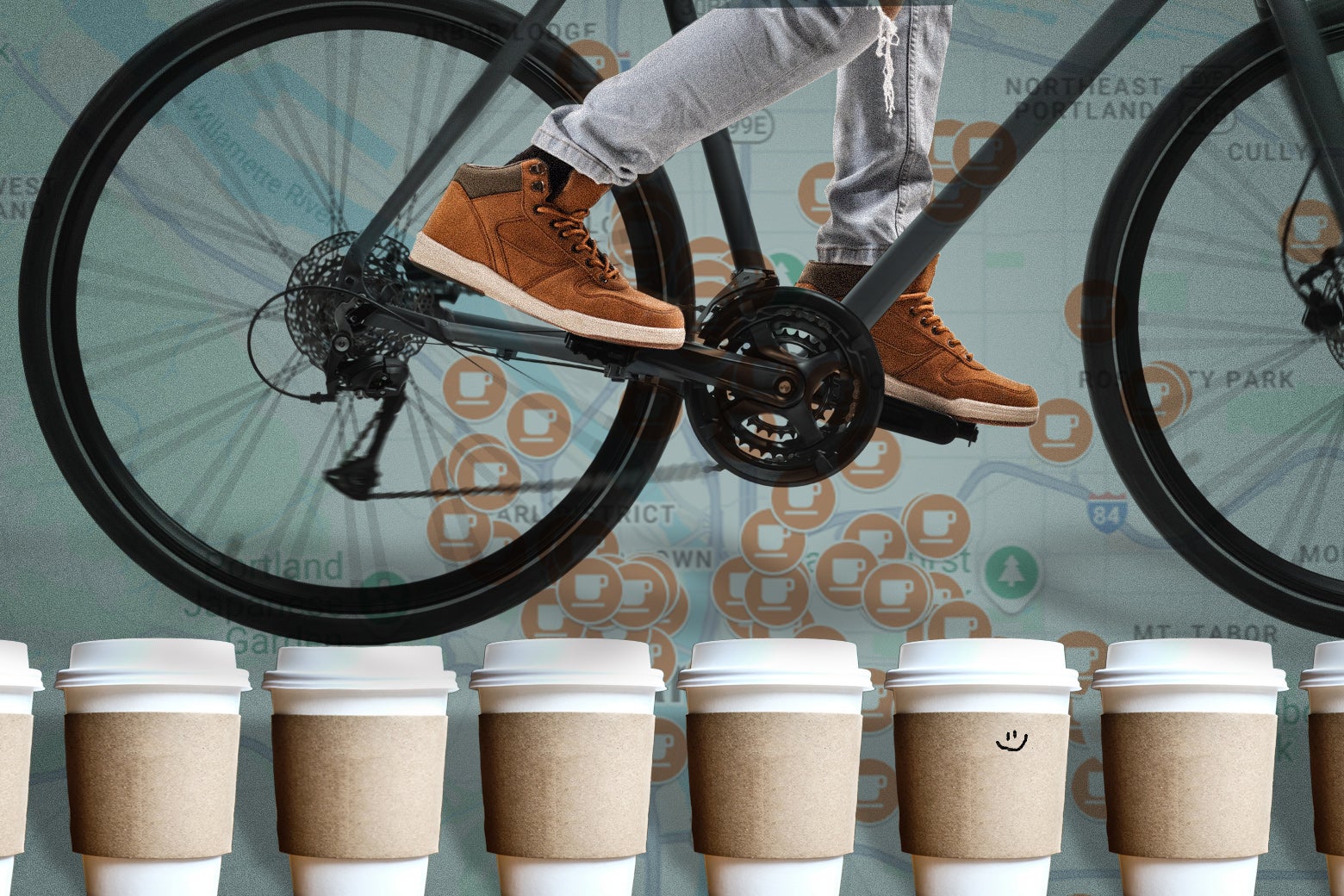
I like bikes. I like coffee. I especially like biking to coffee, which is one of the things that drew me to moving to Portland, Oregon, many years ago. Sometimes I also like giving myself a big dumb project, like, say, biking to 100 different coffee shops. Did Portland even have 100 coffee shops within biking distance that were worth visiting? I didn’t check when I started, but it seemed plausible. So one sunny spring day following one of our notoriously gray and rainy winters, I decided to do it, posting a photo from each one on Instagram with the hashtag #biketobeans.
This was in 2023, and biking to 100 coffee shops appealed to me as a way of getting back in touch with the city after the tumult and isolation of the pandemic years, to break out of the routine of a shrunken world. The project was also a kind of personal repudiation of the right-wing portrayal of the city as urban hellscape. At the same time that I was cruising along Portland’s river-spanning bridges and tree-lined streets, then-candidate Donald Trump was describing it as a “shambles” and “a burned-down hulk of a city.” Earlier this month, responding to something he saw on television, he insisted that “paid terrorists” are ruining the city, making it “like living in Hell.” As with other blue cities he’s targeting, the allegation of violent chaos is intended to establish a pretext for policing with the National Guard over the objections of local leaders—or as he put it on Thursday, “to do a pretty big number on those people in Portland that are doing that.”
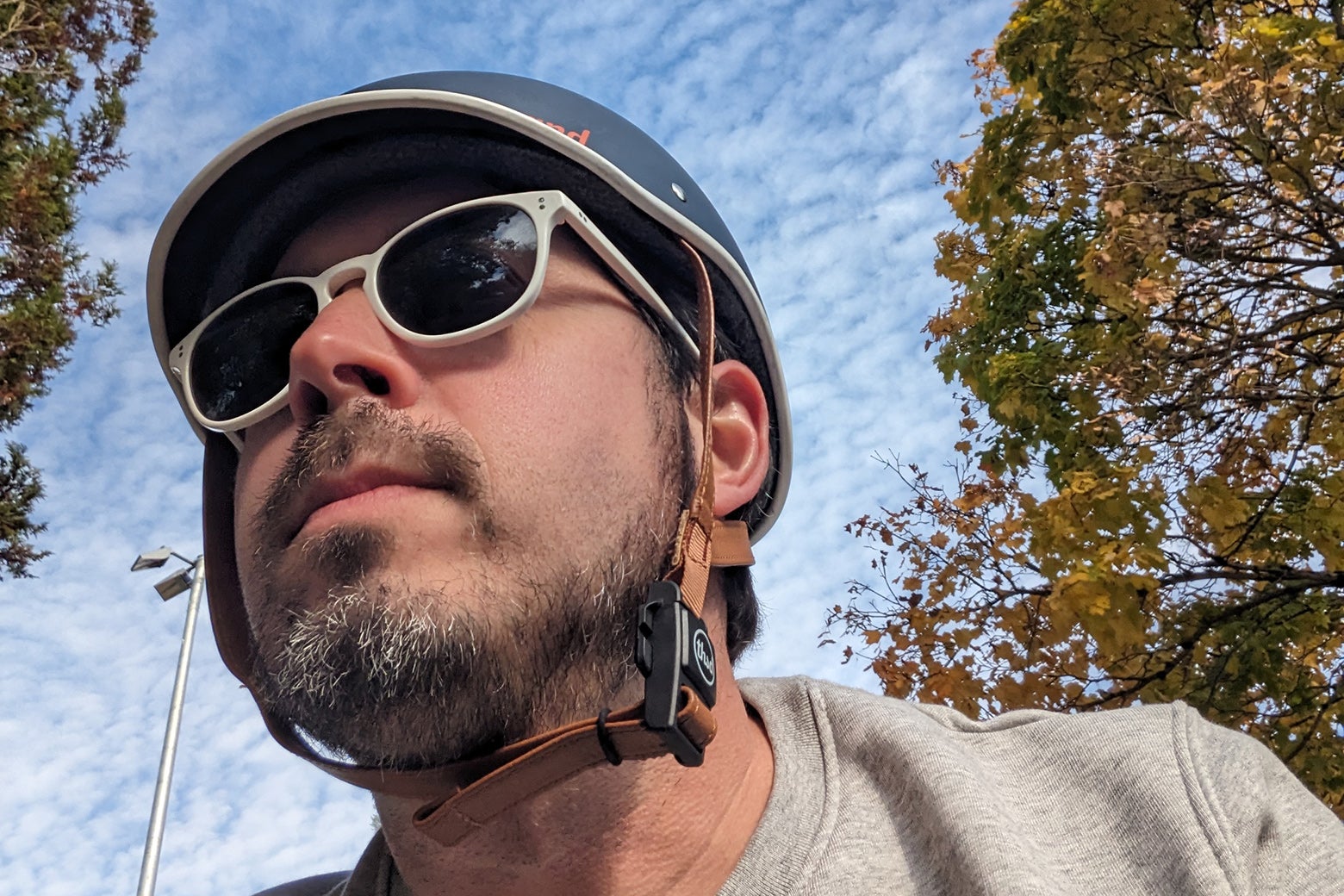
Is it really as bad as he says? It sure doesn’t look that way from the view on two wheels, experienced in real life rather than mediated through screens and social media. My project took me through hundreds of miles of Portland, branching out to every quadrant of the city. What better way to get to know what’s really going on in one of America’s most progressive cities, caught between its own struggles with good governance and an authoritarian president determined to exaggerate its problems to justify a military crackdown, than through its myriad coffee shops?
The one rule I set for myself is that big chains didn’t count, so there would be no Starbucks, Peet’s, or Dutch Bros. Thankfully, that’s not a problem here. It’s funny to look back now on the early-2000s fear that Starbucks would use its deep pockets and market dominance to wipe out indie coffee shops. Naomi Klein’s influential book No Logo, published in 1999, compared Starbucks to Walmart and warned that it would have a similarly destructive impact on smaller competition. As recently as 2007, the idea that Starbucks wasn’t a threat to coffee culture—indeed, might even be good for it—was sufficiently counterintuitive to merit a piece in Slate. Today the company is struggling to course-correct from a tilt toward serving glorified milkshakes and to-go orders placed via mobile app, attempting to lure customers back inside with comfortable seating and ceramic mugs. Groundbreaking ideas … for the 1990s.
As for the indie shops, they’re simply operating on another level. It has never been easier to find places making good to great coffee all over the world, but it’s especially so in Portland. From my apartment on the central eastside, my shortest rides to coffee were merely one block away. The farthest I had to pedal to reach my goal was barely more than 7 miles one way. Within that radius is a wealth of small coffee businesses to rival any city’s in the world—and indeed, Portland’s coffee scene is more cosmopolitan than ever, embracing influences from Asia, Africa, and Latin America.
At least one of the shops I visited had in fact taken over a space recently abandoned by Starbucks. Tov started out serving Egyptian-style coffee in a double-decker bus parked among food trucks. When the nearby Starbucks closed, Tov moved in. Now instead of Frappuccinos, guests enjoy a rich coffee spiced with cardamom and manually brewed in a hot bed of sand. A boring corporate coffee shop giving way to a unique small business that grew from bus to brick-and-mortar? So Portland.
Tov exemplifies another notable change in the city’s coffee scene. Portland was an early leader in the “third wave” of American coffee, most famously via pioneering roaster Stumptown. These innovative shops elevated the quality of coffee and espresso, but there was a sameness to the drink offerings. The menus were austere and limited. You could have your straight coffee or your classic Italian espresso drinks, perhaps a mocha if you were feeling indulgent, but anything beyond that risked crossing a line into adulteration. Though admirably centering the work of coffee farmers, this purist approach allowed for little cultural representation from coffee-producing countries beyond the growing of the beans.
Contemporary Portland coffee shops provide a much worldlier view of coffee culture, incorporating more diverse ingredients and highlighting countries that have often been overlooked in specialty coffee. At La Perlita, home of the “True Mexican Mocha,” the shop features coffee from their sister business Reforma Roasters, specializing in sourcing directly from growers in Mexico. Super Joy flavors their mocha with Sichuan peppercorn. A visit to Abba Coffee introduced me to delightfully good beans from China and a latte flavored with black sesame. Portland Cà Phê bucks the industry preference for arabica beans to highlight robusta from Vietnam, serving it the traditional way with condensed milk as well as in lattes flavored with ube or coconut cream.
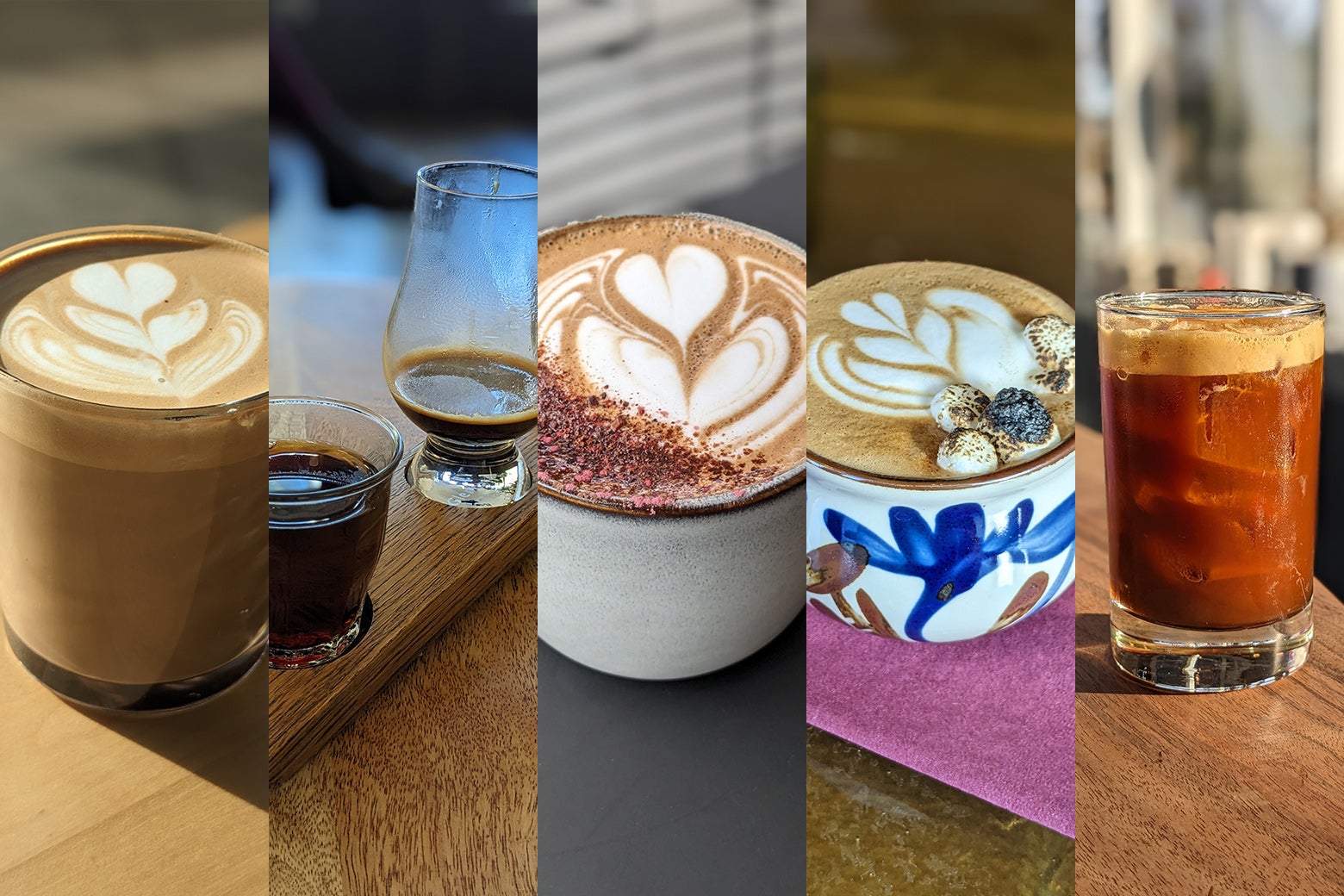
Though I typically go for simple black coffee, I viewed my bike adventure as an excuse to branch out into more fun options. At Exquisite Creatures, a completely plant-based coffee shop, I indulged in a latte designed to taste like movie-theater popcorn. At Never Coffee, I tried a distinctly Oregon creation flavored with Cascade hops, essential to our IPAs but unexpectedly complementary to espresso. My messiest outing was at the Korean shop Soro Soro, whose “snow affogato” involved pouring espresso into ice cream through a massive cloud of cotton candy. It was visually striking, over-the-top sweet, and undeniably silly, but delicious too.
Wild drinks like these are not confined to Portland; they reflect broader trends in the specialty coffee industry, which has become more willing to let its hair down as it has evolved from a scrappy underdog into a reliable fixture of global cityscapes. In a recent essay, coffee researcher Peter Giuliano identified this playfulness as part of a broader shift toward culinary maximalism: less agricultural and more multicultural, emphasizing creativity, entertainment, and complexity.
Of course, this being Portland, I found plenty of places doing their part to keep things uniquely weird. There’s Carnelian Coffee, a cozy shop decorated with the owner’s collection of “cool rocks.” Keia and Martyn’s serves improbably good coffee in the Lloyd Center, a ghost town of a shopping mall now enjoying a strange second life for quirky businesses like magic shops and comic book stores. And then there was Pájaro, a place that felt more like performance art than a capitalist enterprise, a tiny shop apparently open for just two hours in the afternoon where the owner made fresh nut milk by hand, refused the use of disposable cups, offered no set menu, and boasted of using special filters to remove “pharma” from the water. It took 20 minutes to actually get coffee there, but I loved every confounding minute of it.
Admittedly, it’s not all sunshine and rainbows in the Rose City. On one visit, a thief bolted out the door with the baristas’ tip jar, which was replaced with a less theft-susceptible hole drilled into the counter. Another business in a rough patch of downtown kept an employee stationed outside the entrance; it was the first time I’d been to a coffee shop that needed a bouncer. These challenges haven’t killed the businesses, but they were signs of disorder and lowered trust, though nothing on the scale of the city’s chaotic depiction in right-wing media.
More broadly, downtown Portland still lags behind the rest of the city in terms of economic recovery after COVID, reflected in low hotel occupancy rates and empty offices. With fewer tourists visiting and so many more people working from home, it’s not surprising that I never had to worry about finding a table at the downtown shops I visited. Yet remarkably, only a handful have shut their doors in the time since I completed my bike tour. (Sadly, sweet Pájaro was among them, though a new coffee shop is in its place.) Of the few that closed, most have either been replaced by other coffee shops or simply moved to another location nearby, and many new ones continue to spring up, even downtown.
I still haven’t made it to all of them. By the time I’d biked to more than 80 coffee shops and began plotting out my final rides, the once daunting goal of visiting 100 shops was almost too limiting. There were still so many I’d miss! But the journey had to end somewhere, wrapping up with stop No. 100 at a coffee shop by day that transitioned into a beer bar by late afternoon. There I got one last fancy drink, a tasty shakerato made with espresso, panela sugar, and orange bitters, followed by a celebratory beer (since one can’t live on coffee alone).
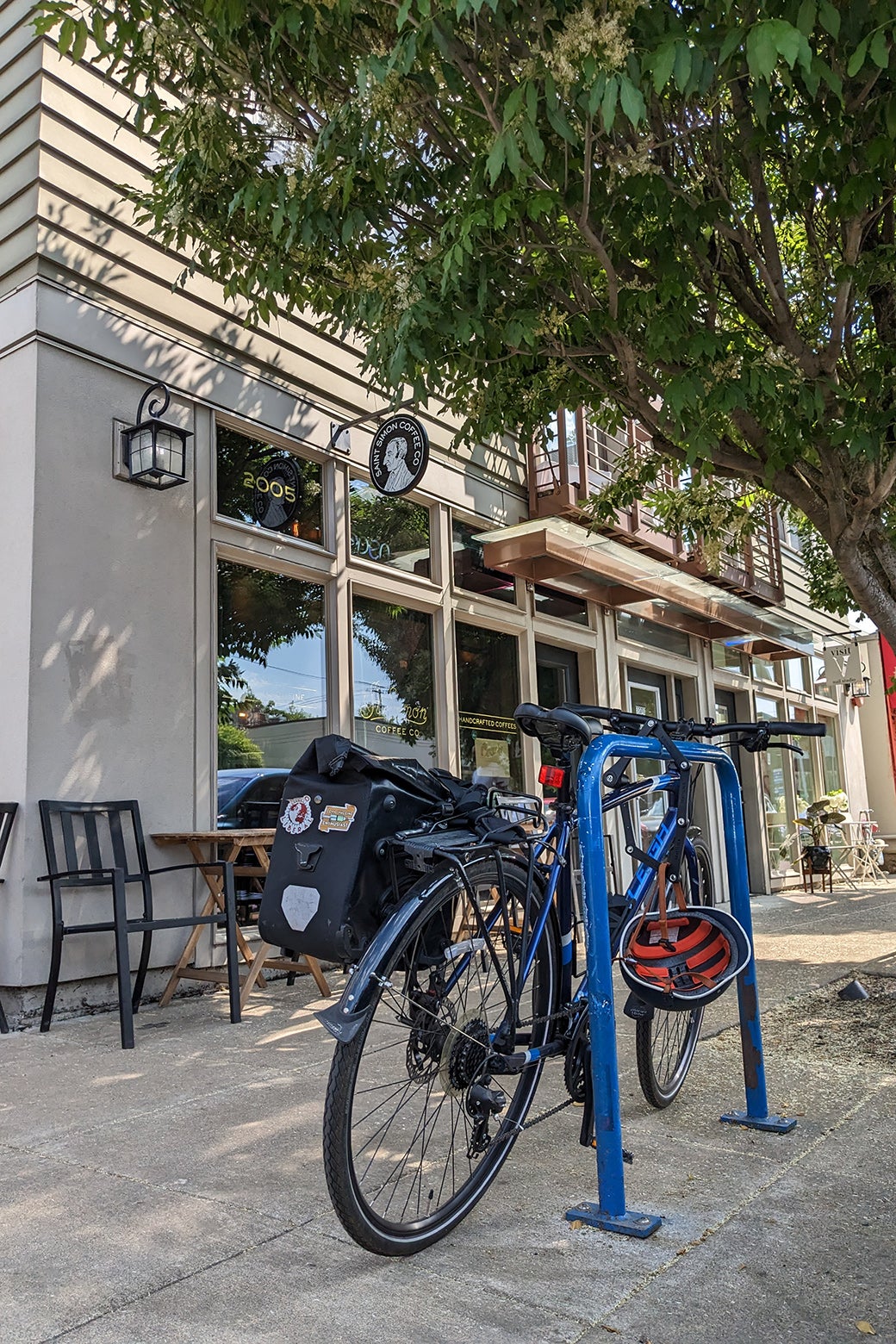
In the time since then, I’ve returned to old habits: biking to my regular shop, Saint Simon, a charming spot with just three tables, sipping my mug of simply good black coffee. If there was one downside to my bike-to-beans project, it was the twinge of guilt I felt neglecting the place where I’ve been a regular for years. After all the miles covered and the inventive lattes, it feels good to be back where the baristas and I know each other by name, the coffee is poured as soon as I walk in the door, and the music is reliably excellent. It’s where I sit writing this now.
I set out on my bike and coffee journey at a time of optimism, the dark days of the pandemic receding and the possibility of permanently excising Trump from American politics on the horizon. Looking back on it today, I can’t help but see the contrast with the MAGA movement’s anti-multicultural malevolence. Every one of those 100 cups was a lesson in enrichment thanks to international trade, immigration, and urbanization, sources of dynamism that this administration is strangling with its backward-looking efforts to define “real America” as suburban, white, and definitely not woke.
Trump’s brand of politics feeds on the lie that multicultural cities are frightening and chaotic. If he follows through on his threats to deploy National Guard troops to Portland, it won’t be for the benefit of the people who call the city home. The intent will be to incite a spectacle of chaos, manufacturing a crisis to retroactively justify the belief that Democrat-run cities are in need of forceful takeover. The provocation will be the point.
Don’t fall for it. The Portland of right-wing imagination is a city engulfed by flames and violence, a vivid warning of what will befall other places if they vote for Democrats. “Unimaginably bad things would happen to America” if Biden were elected, Trump posted in 2020, specifically citing the “anarchy” of Portland. (As it happened, the only scene of mass anarchic violence following Biden’s election was enacted by Trump’s own supporters at the Capitol.)
The reality is that the problems facing Portland and other cities are nothing that can’t be addressed through normal governance, and that these are on the whole vibrant and quite pleasant places to live. “Real America” can mean things like biking to get a vegan ube latte from a purple-haired barista, and if you’d like a taste of what makes America truly great, you can find it in a coffee shop—in Portland, certainly, and probably a short ride from where you live.