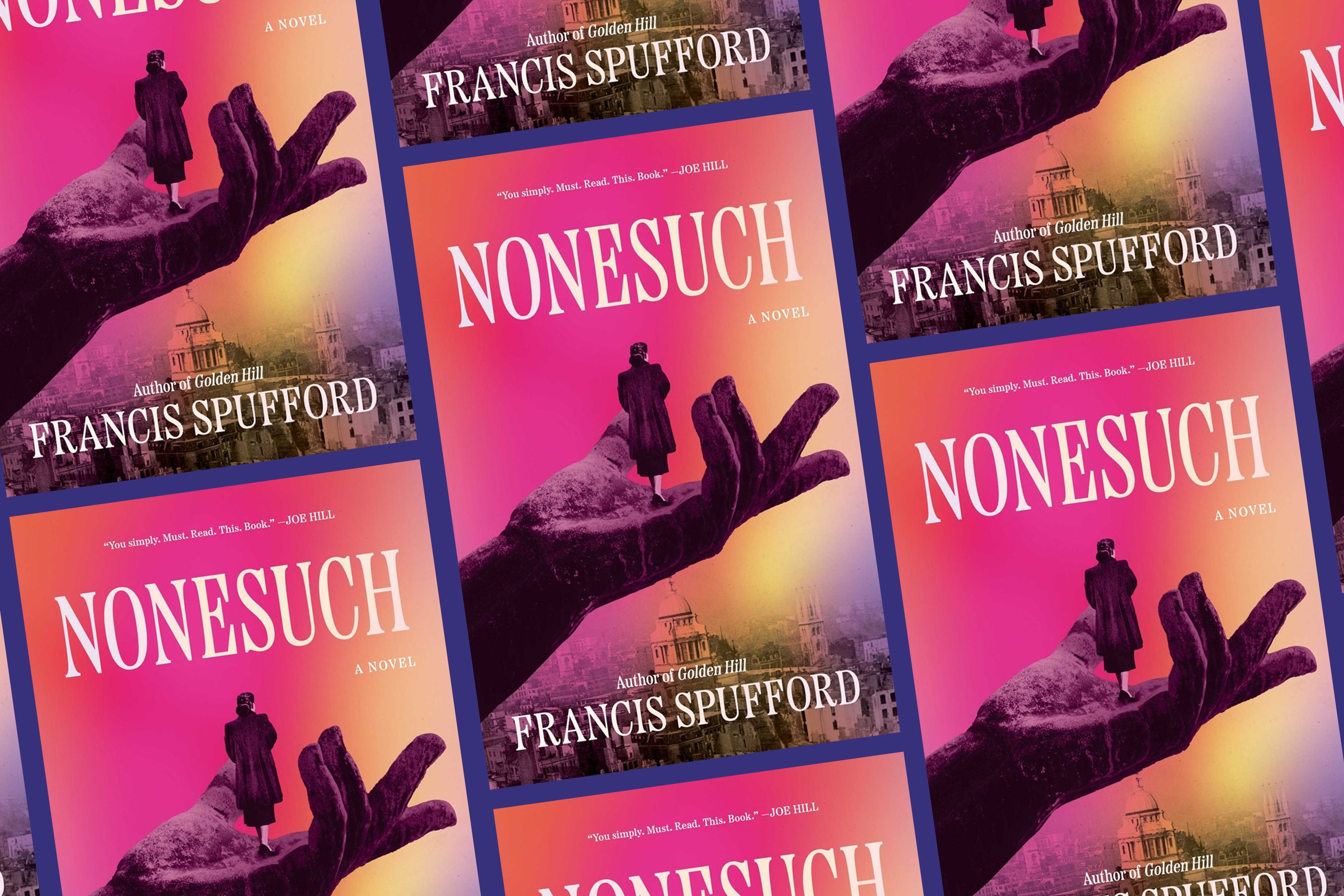
No historical period offers a more tantalizing prospect for a time-travel story than World War II, when the fate of nations hung on the actions and lives of a few key individuals. Or, as Doctor Who once put it, “Let’s kill Hitler!”
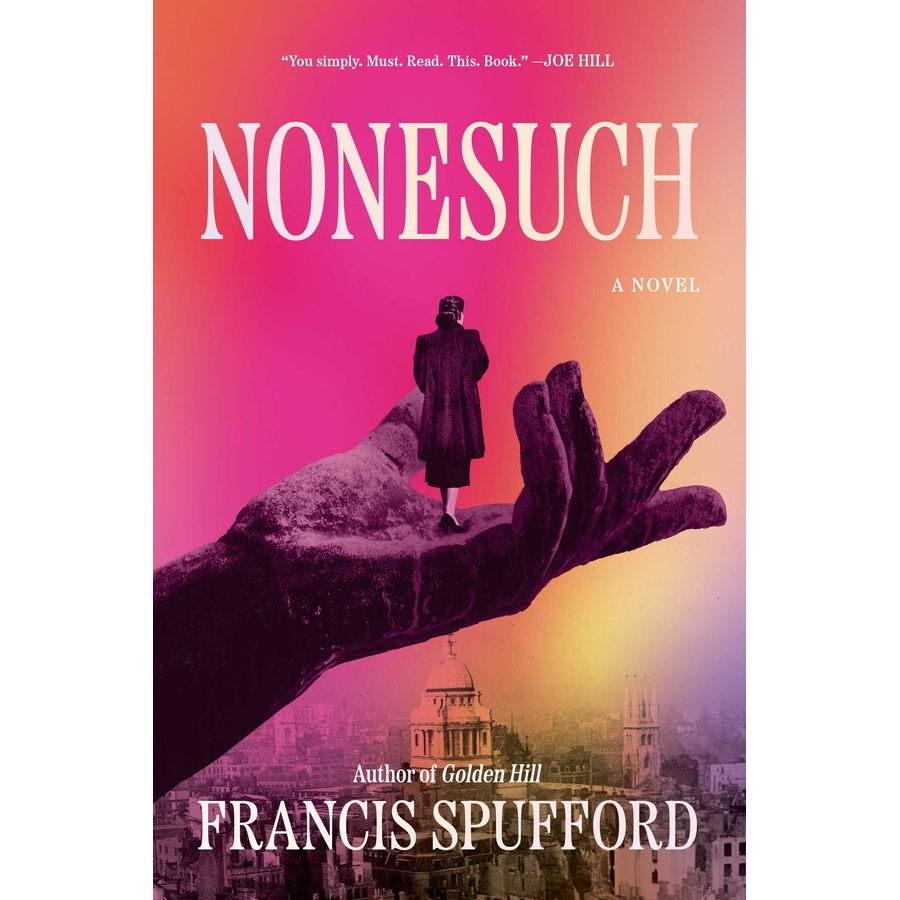
The possibility of changing the course of the war runs through Francis Spufford’s radiant new novel Nonesuch, set in London leading up to and during the Blitz. Here, however, the would-be history fixer is a sleek blond fascist sympathizer named Lady Lalage Cunningham, a character who seems to have been inspired by the equally blond and upper-class British Hitler fan Unity Mitford. Lall, as she’s nicknamed, has a scheme to travel back in time and prevent England’s declaration of war on Germany. The heroine of Nonesuch, Iris Hawkins, stumbles onto Lall’s plan by accident, but it’s the friction between the two women—who absolutely hate each other—that really lights the match under Spufford’s story.
Iris works as a secretary for a stockbroker in the city, aka the Square Mile, the venerable financial district in London. She harbors mighty ambitions that are hindered by both her gender and her class. Not only are women barred from managerial positions in British brokerage firms, but anyone can tell from her accent that she hails from Watford, a lower-middle-class suburb of the city. The relentless pressures of the English class system are a persistent theme in the novel, and Iris feels them to an exquisite degree. She bides her time, socking away as much cash as she can, running a sketchy side hustle peddling information to one of her firm’s competitors and studying up on how the markets work. Someday she plans to be rich enough to “condescend to every toffee-nosed public schoolboy who condescended to my dad.”
Slate receives a commission when you purchase items using the links on this page. Thank you for your support.
For diversion, Iris has sex, picking partners with “worldly pizzazz and masculine swagger, qualities she enjoyed so long as their possessor was stupid enough.” It’s a risky practice, but Iris has a diaphragm and a highly refined nose for character. She’s “confident she could spot the angry men and steer clear of them. You had to be able to, if you were of any kind of adventurous disposition.” She has no intention of becoming anyone’s suburban “wifey,” so she keeps things casual to retain control over her own destiny, even though she knows that this means she’ll sometimes be dismissed as a slut. When, much later in the novel, a character refers to her as “an impertinent baggage who refuses to be intimidated by what is more powerful than her,” Iris grins in response. She considers the description fair, and possibly even a compliment.
At an artsy nightclub, Iris first meets Lall, who is busy ignoring the puppyish adoration of a young television engineer (the BBC has just started experimenting with the medium) named Geoff. Lall’s evident fascist sympathies annoy Iris, and soon the two women are insulting each other. Iris then proceeds to proposition Geoff, waltzing out the door with the worshipper Lall didn’t want but can’t forgive Iris for stealing. While, after her tryst with Geoff, Iris tries to creep out of the oddity-stuffed house he shares with his dotty father, she spies a weird figure with a featureless face watching the place. Soon, the strange, malevolent entity is pursuing her on her way home from the offices of Cornellis & Blome. Iris and Geoff will learn that Geoff’s father and Lall are both mixed up with a secret, decaying aristocratic order whose members are intent on using what magical powers they retain to secure their own privileges.
Let me not, however, leave you with the impression that the pair’s quest to thwart these plans consumes most of Nonesuch. This is a book interested more in people and place than in plot, and Iris—one of the most perceptively written women ever produced by a male novelist—shares main-character status with London itself. Spufford, a vivid stylist, wants the reader to feel and smell and hear what it was like to live in the city during wartime.
Under the blackout, the streets become a “dim maze,” in which “buildings were coal-black cliffs, pavements were vistas of black on black, gray on black, black on gray, which you squinted along unsure whether the obscure stir of movement you saw was a trick of the eye or another pedestrian about to collide with you head-on.” While on an errand, Iris notices how, “under the glazed-tile vaulting of the Bank, the murmur of conversation was higher than it had been before—higher in pitch,” because the men have all gone into the army, leaving the women to do London’s business. Then the bombs start falling by night, and “each bomb might be that one; you couldn’t know it wasn’t till it hadn’t fallen on you.”
Spufford—the award-winning author of three previous novels, including 2023’s Cahokia Jazz, as well as a wonderfully eccentric array of nonfiction books—has a gift for metaphor. The dome of St. Paul’s Cathedral looks like a “tethered planet.” On a winter night, “the waters of the Thames were iron-dark, welling and wrinkling as the tide turned, and they ate each snowflake that fell in them as if it had never been.” As Iris and Geoff begin a rocky love affair—she’s afraid of closeness; he’s easily wounded—much of that heady, descriptive power turns to sex, a topic Iris previously regarded as delicious, ephemeral fun. What she finds with Geoff is a whole other level of nakedness. “Was this what people meant, when they talked about being ‘in love’?” she asks herself. “No hearts, no flowers, no moonlight serenade; this awkward, clumsy, sticky, exposed, unbearable, unleavable thing?”
You could say that Nonesuch integrates the peril of history-altering magic into the fabric of everyday life, only Iris’ life is anything but ordinary. She and Geoff take the magic in stride the way they take the war in stride, with its nightly bombardments, the omnipresent threat of annihilation or utter loss, the possibility of their homeland’s being invaded and hideously transformed—all of this is nearly as surreal as the magical elements of the story: incorporeal beings, animated statues, and pathways to a place outside time.
Nonesuch ends not with a cliff-hanger, exactly, but with a transformation that necessitates a follow-up. (A sequel will be released next year.) Most time-travel novels, because they mess with the sequence of cause and effect, have intricate, puzzlelike storylines that tend to shortchange their characters. Nonesuch, by contrast, suggests a new use for this by-now-familiar plot device—not simply as a thought experiment about the course of history, but as a more intimate crucible. The lives we live form the selves we become. London lost much in the Blitz, but its citizens emerged with a new understanding of their own reserves of courage and resolve, an understanding that would itself be lost if the bombardment was undone. Which is the preferable of the two outcomes? That is a riddle that not even Doctor Who could solve.