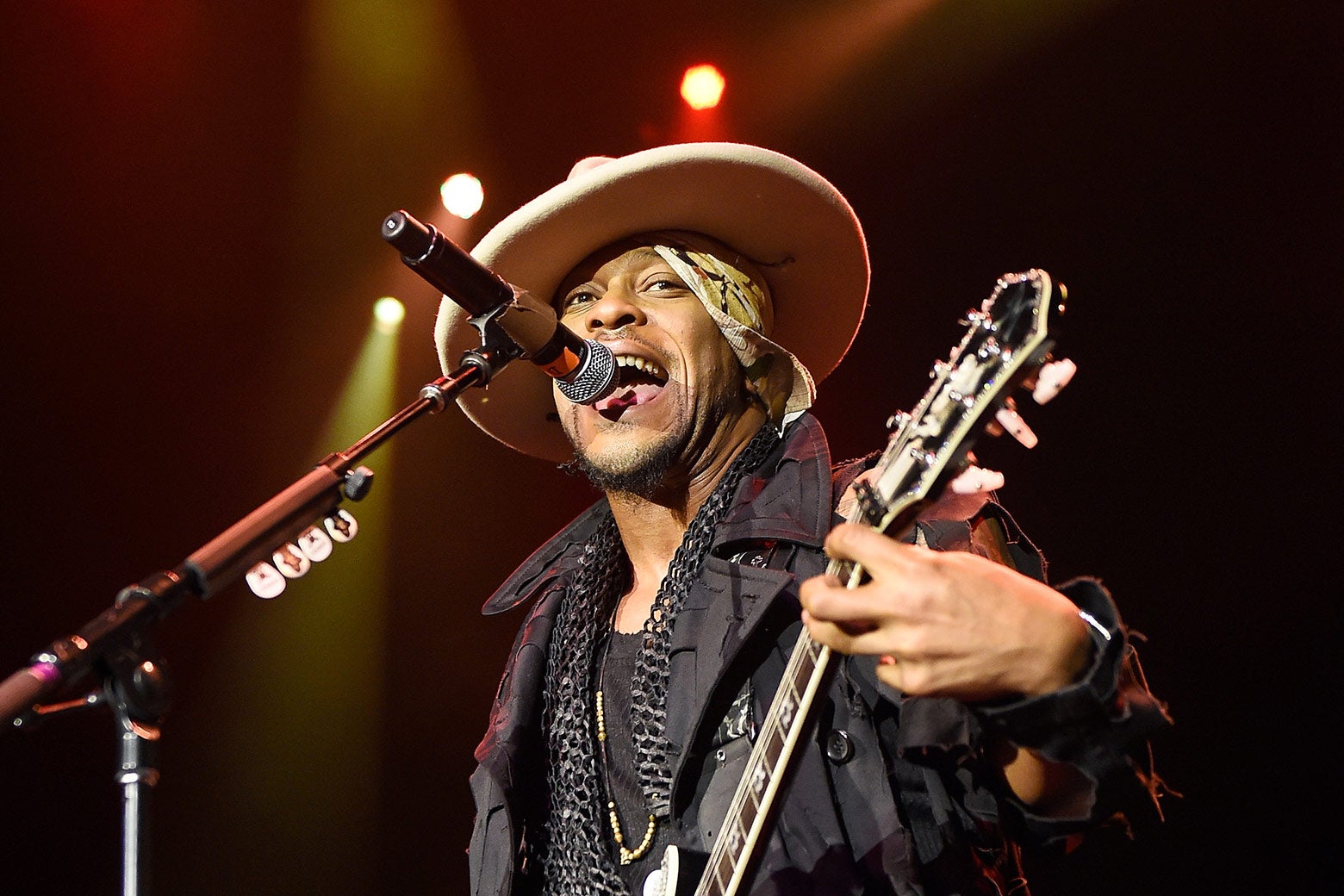
Great artists who are the opposite of prolific are always a thorny subject. Many of our most romantic ideas about creativity tend to view “genius” as a kind of vessel state, from which beauty and inspiration simply flow forth, effortlessly and boundlessly: It’s deflating to be confronted with the reality that this isn’t always how it works. And, of course, when such artists come to be the subjects of intense devotion and scrutiny, it often provokes a demand for more and more, faster and faster, which usually has the counterproductive effect of further pressurizing an already fraught creative process. And yet these artists are distinctively precious in their own way, necessary reminders (particularly in our age of pathological, parasocial standom) that even stars don’t exist solely as objects for our consumption, that sharing a world with people who provide us with beautiful things is a privilege to be cherished and cared for, rather than an entitlement to be hoarded or otherwise fetishized.
Michael Eugene Archer, better known to the world as D’Angelo, died on Tuesday of pancreatic cancer at age 51. D’Angelo released only three studio albums in a career that spanned 30 years, and yet he will go down as one of the great musicians of his or any era, a man whose art had the power to make and move whole worlds. Born and raised in and around Richmond, Virginia, D’Angelo began performing in his father’s church as a young child, and stories of his adolescent domination of local talent shows still circulate through the Richmond music scene like folktales. He signed a publishing deal with EMI in 1991, before he was even old enough to vote. After a few years paying dues and scrounging together production work, he released his first solo album, Brown Sugar, in the summer of 1995.
It was a stunning debut. Like many former child prodigies finding their way into adulthood, D’Angelo proudly wore his influences on his sleeve—Prince, Stevie, Sly, Marvin, to name just a few—and yet in the album’s best moments he managed to transcend and occasionally even exceed them. His cover of Smokey Robinson’s classic “Cruisin’ ” achieves an ecstatic, almost spiritual grandeur that Robinson’s original never really approaches, and I say that as someone who considers Smokey one of the greatest singer-songwriters of the 20th century. These classicist tendencies, coupled with Brown Sugar’s notable (but by no means exclusive) use of vintage instruments—most significantly D’Angelo’s Fender Rhodes piano, arguably the defining sound of the album—led D’Angelo to be pegged with the sobriquet neo soul, a buzzword of the mid-to-late 1990s that D’Angelo himself rejected.
Brown Sugar became a sleeper hit, ultimately going platinum, and it remains D’Angelo’s most self-consciously “mainstream” and radio-friendly work. Still, it barely scratched the surface of what was to come. Its follow-up, 2000’s Voodoo, would make him a legend, although not before a seemingly interminable wait for the album to arrive. (Little did we know.) In hindsight, the nearly five-year gap between Brown Sugar and Voodoo was a frustrating but also thrilling time for D’Angelo fans, as those of us who’d been hooked on Brown Sugar inhaled whatever new D’Angelo music was gradually seeping out during that prolonged interregnum, often via soundtracks, compilations, or appearances on other artists’ albums, all the time wondering what he was cooking up for his elusive sophomore LP. There was the extraordinary cover of Prince’s “She’s Always in My Hair” on 1997’s Scream 2 soundtrack; “Nothing Even Matters,” the pristine duet with Lauryn Hill on the latter’s monumental Miseducation of Lauryn Hill. Then there was “Devil’s Pie,” a shatteringly brilliant original track produced by DJ Premier that first appeared on the soundtrack to Hype Williams’ 1998 cult classic Belly, and that would ultimately find its way onto the finished Voodoo. All the while, speculation and gossip about what D had in store next pulsed through an internet that blessedly hadn’t learned how to completely suck yet. (Okayplayer.com, which came online in 1999, was a particularly thrilling arena for these conversations.)
Finally released in early 2000, Voodoo was a revelation. D’Angelo had crafted the album alongside a collective of musicians that had dubbed themselves the Soulquarians, which included drummer Questlove (who would continue to collaborate closely with D’Angelo for the rest of his career), bassist Pino Palladino, keyboardist James Poyser, guitarist Charlie Hunter, and trumpet virtuoso Roy Hargrove. Working under the profound influence of ascendant hip-hop producer James Yancey, aka J Dilla, Voodoo was a sprawling, restless, deeply experimental and totally dazzling work. It was the rare blockbuster pop release—it debuted at No. 1 on the Billboard album charts—that felt genuinely avant-garde.
To call Voodoo influential is entirely accurate but also feels a little inappropriate, as doing so runs the risk of mistakenly suggesting that there’s any other music on earth that sounds like it. It’s an album of hypnotic, off-kilter rhythms, ravishing melodies, and dense and intricate harmonic structures, all in service of a collection of odes to spirituality and sex, sin and redemption, the sum effect of which was a 13-song suite of music that, 25 years later, still resists categorization and characterization. It was a work that bridged the surreal alienation of music’s digital age and the warm organicism of its analog one, like hearing a sonic road map to some alternative future, not just for R&B but maybe for everything else too. Try as they might, no one else ever really managed to follow that map quite like D’Angelo had laid it out, but that’s certainly not their fault.
It’s here that we must address the (admittedly fantastic) music video for “Untitled (How Does It Feel),” which became a pop-cultural touchstone—in 2018 Billboard named it the third-greatest video of the 21st century—and still hangs over the legacy of Voodoo and D’Angelo in ways that, right now especially, feel worse than unfortunate. It turned D’Angelo into a sex symbol but also a sex object, to degrees that quickly brought debilitating insecurity and self-doubt. Live shows would spin out of control as fans shrieked for him to take off his clothes before he’d even begun singing. In a 2012 interview with GQ, he even recalled a confrontation with a female fan after she’d thrown money at him onstage. (“That made me feel fucked up.”) The video’s success also further highlighted an irony that would remain at the heart of D’Angelo’s career for the next two-plus decades: that one of the most talented musicians on the face of the earth was also profoundly uncomfortable with the fame that his own gifts made inevitable.
The ensuing decade was a bleak time. Years passed, and a follow-up to Voodoo failed to materialize. D’Angelo retreated from the public eye almost completely, while rumors of drug and alcohol addiction swirled, soon to be confirmed by a series of arrests and a harrowing car accident in 2005. Fans began living in fear of the day when the news would come that the self-destruction had finally extinguished the talent. Then, in early 2012, the unthinkable happened: D’Angelo began appearing onstage again, with grainy but thrilling fan-shot videos hitting YouTube from a European tour.
A new album finally arrived in December 2014. Credited to “D’Angelo and the Vanguard” (although still boasting many of the same musicians who’d appeared on Voodoo, including the incomparable rhythm section of Questlove and Palladino), Black Messiah was another masterpiece, a totally worthy successor to Voodoo that also marked yet another series of breathtaking artistic evolutions. Upon release, the album was hailed for wading into contemporary politics far more than D’Angelo’s previous work, particularly tracks like “The Charade” and “Til It’s Done (Tutu),” both of which were co-written with singer and lyricist Kendra Foster and found him wading into topics like police brutality and environmental injustice.
And yet just as stunning was the album’s shift in musical direction. Always the student, D’Angelo had used his long hiatus to hone his guitar skills, and Black Messiah found him engaging with influences only hinted at on his previous LPs: Hendrix, the Beatles, Bowie, Led Zeppelin. If much of the songwriting and sonic architecture of Voodoo had veered toward the dreamy and ethereal, Black Messiah had the fastidious precision of a master jeweler carving away at a precious stone. As I wrote at the time, “We can talk about how it’s taken 15 years for D’Angelo to make this album; we might also talk about how it’s only taken 15 years for D’Angelo to make this album.” In the years since, I’ve sometimes half joked that it’s the second-greatest album of the 21st century, only because Voodoo managed to sneak into January 2000.
There were many ways in which D’Angelo seemed beholden to no one’s sense of time but his own: One of these that strikes me today in particular was that he was one of music’s greatest album artists who worked in a historical context in which technological and industry forces were slowly eroding the primacy of that format. I don’t mean that in some tragic way: I mostly think it was a misguided development that, in the later part of the 20th century, many fans and critics came to reflexively view the album as music’s central unit of prestige and accomplishment. But sometimes the album really was (and is) a particularly fertile format for expression, and this was true for D’Angelo more than most. Voodoo and Black Messiah aren’t just carefully curated and expensively packaged collections of great songs; they’re whole worlds of pure sonic imagination, with a sense of scope and scale that’s entirely transporting from start to finish. They’re works whose peers are titles like Sgt. Pepper and Blue and Innervisions, albums that, through some mystical unity of aesthetic and expressive character, completely exceed the sum of their parts. That D’Angelo somehow made his within the context of an industry that was increasingly viewing such projects as frivolous, if not superfluous, makes his achievements all the more rarefied.
As you’ve probably already gathered, on a personal level D’Angelo’s music meant nearly the whole world to me. Both Brown Sugar and Voodoo came out at formative points of my then-young life, and both albums fundamentally shifted the way I thought about the musical world around me. As I’ve written elsewhere, Voodoo in particular played an outsize role in making me want to write about music professionally, maybe more than any other album. When I reviewed Black Messiah for Slate back in 2014, I remember staying up nearly all night listening to it and filing my review late the following day, and every second of the experience felt like an honor. I am devastated by the knowledge that he’ll never make more music, but I also know that D’Angelo existed on his own terms and didn’t owe anything more to me or anyone else. He belonged to everyone and to no one, and he always will, and he left us with a small but indispensable collection of some of the best music ever made. I’ll miss living in this world with him, even if he’s moved on to a better one.